Steve Kerr's Blueprint to Beat the Suns Crumples Under Jalen Green’s 36-Point Barrage
Steve Kerr's Blueprint to Beat the Suns Crumples Under Jalen Green’s 36-Point Barrage
In the high-stakes environment of the NBA Play-In Tournament, a coach’s game plan can be the difference between a deep playoff run and a flight home. For Steve Kerr, the blueprint to defeat the Phoenix Suns was built on defensive discipline and neutralizing their perimeter threats. Unfortunately for the Golden State Warriors, that blueprint was shredded on Friday night as Jalen Green exploded for 36 points, leading the Suns to a 111-96 victory and ending the Warriors' season in emphatic fashion.
Kerr had voiced confidence in his team's ability to control the pace of the game, stressing that the Warriors needed to force the Suns into half-court sets. The logic was sound: prevent the Suns’ athletic wings from getting out in transition. However, the Suns had other ideas. Phoenix spent a staggering 47 minutes and 21 seconds in the lead, blitzing the Warriors from the opening tip. The defensive rotations Kerr envisioned were consistently a step slow, allowing Green to shoot 14-of-20 from the floor, including 8-of-14 from beyond the arc.
Strategy vs. Reality: The Turnover Crisis
A primary pillar of Kerr's strategy was ball security. Against a Suns team that thrives on chaos, Kerr knew that empty possessions would be fatal. Yet, the Warriors’ execution was uncharacteristically sloppy. They coughed up the ball 20 times—many of which were unforced errors—leading to a 14-5 deficit in the steals department. Jordan Goodwin and Dillon Brooks were particularly effective at disrupting the Warriors' passing lanes, rendering Kerr’s offensive sets stagnant and predictable.
The Warriors’ shooting woes only exacerbated the tactical failure. While Kerr’s system relies on the gravity of Stephen Curry, the future Hall of Famer was hounded all night by Brooks. Curry finished with 17 points but struggled through a 4-of-16 shooting night. The "blueprint" required other players to step up, and while Brandin Podziemski tallied 23 points, the lack of a secondary scoring punch in the starting lineup left the Warriors chasing points for the duration of the contest.
Team Stats and Game Results
The final box score tells a tale of two very different performances. The Suns shot 48% from the field and were a perfect 15-of-15 from the free-throw line. In contrast, the Warriors shot 44% but were plagued by a lack of three-point efficiency, hitting only 11 of 33 attempts (33%). The Suns' bench, bolstered by 19 points from Goodwin and 10 from Oso Ighodaro, outplayed the Golden State reserves in critical stretches.
The Warriors finish their 2025-26 campaign with a record that reflects their season-long struggle for consistency. Throughout the year, they averaged 117 points per game but allowed nearly as many, ranking in the bottom half of the league in defensive rating. This vulnerability was precisely what Kerr hoped to mask with his Play-In blueprint, but the Suns’ offensive versatility proved too great a challenge.
The Final Breakdown
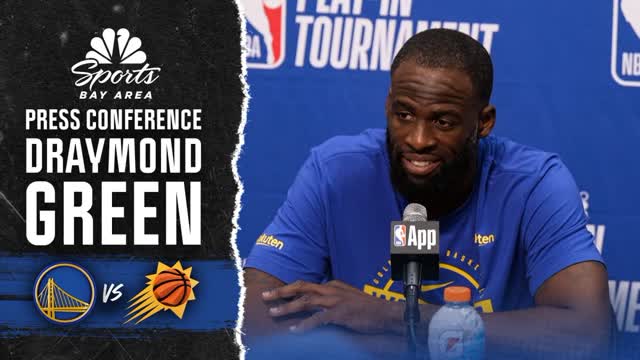
As the fourth quarter wound down, the tactical battle devolved into a physical one. Both Devin Booker and Draymond Green were ejected after a heated exchange, a fittingly chaotic end to a game where Kerr's planned composure went out the window. The Suns now advance to face the Oklahoma City Thunder, while the Warriors head into an offseason that will likely involve deep soul-searching regarding their roster construction.
For Kerr, the loss is a reminder of the evolving landscape of the NBA. The blueprint that worked for a decade—heavy motion, high-volume threes, and versatile defense—is being challenged by a younger, more athletic generation of stars like Jalen Green. Whether the Warriors can adapt their philosophy to match this new reality remains the biggest question of the 2026 offseason.