The Game is About to Change: MLS Confirms 2027 Sprint Season for Landmark Calendar Flip
The Game is About to Change: MLS Confirms 2027 Sprint Season for Landmark Calendar Flip
Major League Soccer has officially confirmed the structure of its most ambitious transformation yet, signaling that the \"Sprint Season\" is finally arriving. As the league prepares to capitalize on the massive momentum of the 2026 FIFA World Cup, the Board of Governors has finalized plans for a transition season in early 2027 that will bridge the gap to a permanent fall-to-spring calendar. This move, long debated by fans and executives alike, will finally align MLS with the global soccer schedule, fundamentally changing how teams like Inter Miami CF and San Diego FC build their rosters and compete for silverware.
The Transition: 14 Games to Glory
The newly announced 2027 transition period, dubbed the \"Sprint Season,\" will run from February to May 2027. Unlike the traditional marathon seasons fans have grown accustomed to, this bridge season will feature a condensed 14-game regular season followed by a revamped playoff format. The stakes for these few matches will be extraordinarily high, as the results will not only crown a transition champion but also determine qualification for the 2027 Leagues Cup, the Concacaf Champions Cup, and the U.S. Open Cup.
League officials noted that the abbreviated format is designed to provide a competitive platform while allowing the league to reset its operations for the official 2027-28 season, which will kick off in late July 2027. This shift is expected to ease the logistical burden on players during the international summer windows and, more importantly, align the league's primary transfer windows with those of Europe's top divisions.
Aligning with the Global Stage
The decision to move to a summer-to-spring format is a direct response to the league's growth on the world stage. By shifting the schedule, MLS will avoid playing matches during major FIFA international windows, ensuring that stars like Lionel Messi and Hirving \"Chucky\" Lozano aren't forced to choose between club and country during critical playoff pushes. Additionally, the move provides a midwinter break from mid-December through early February, allowing teams in colder climates to avoid the harshest winter conditions while still maintaining a schedule that feels familiar to international scouts and players.
Commissioner Don Garber has emphasized that this change is about future-proofing the league. With the 2026 World Cup set to put a global spotlight on North American soccer, the transition to the new calendar ensures that MLS is no longer the \"odd one out\" in the global footballing ecosystem.
Current Context: The Grind of the 2026 Season
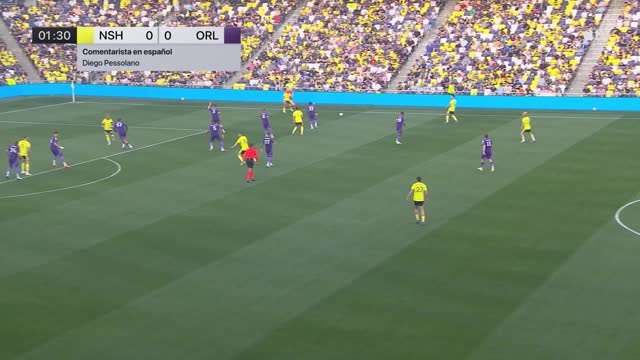
The announcement comes at a time when the current 2026 schedule is demonstrating exactly why a change is needed. Just last night, on Wednesday, March 18, 2026, Inter Miami CF battled to a 1-1 draw against Nashville SC in a high-stakes Concacaf Champions Cup clash. Lionel Messi opened the scoring in the 7th minute with a clinical finish assisted by Sergio Reguilón, but the Herons were unable to hold the lead, conceding a 74th-minute equalizer to Cristian Espinoza.
Miami, the defending 2025 MLS Cup champions, has been navigating a congested early-season schedule that includes domestic league play and continental competition. The fatigue of the current February-to-December grind is palpable across the league. In the Western Conference, LA Galaxy is also feeling the pressure, having recently dropped a 2-1 decision to Sporting Kansas City on March 14, despite a goal from veteran Marco Reus. The upcoming 2027 Sprint Season and the subsequent calendar flip are viewed as a necessary evolution to protect player health and improve the overall quality of play.
Expansion and Evolution: San Diego FC's Role
The timing of the calendar flip is particularly interesting for the league's newest members. San Diego FC, now in its second season of play, has quickly established a deep roster including the likes of Marcus Ingvartsen and Onni Valakari. For expansion sides, the 2027 Sprint Season represents a unique opportunity to find success in a short-format tournament before the league settles into its new long-term rhythm. With 2026 season ticket memberships already soaring at Snapdragon Stadium, the appetite for this new era of MLS is at an all-time high.
As the 2026 campaign marches toward the World Cup break, all eyes are now on how clubs will manage their finances and rosters to prepare for the 14-game dash that awaits them next year. The message from the league is clear: the game is changing, and the Sprint Season is the first step into a bold new future.