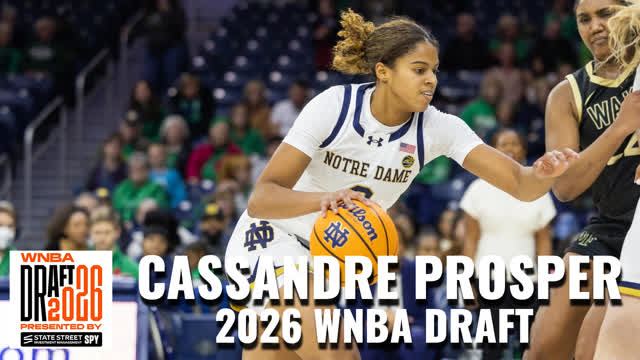
Mystics Secure Notre Dame Standout Cassandre Prosper in 2026 WNBA Draft
Washington Mystics Select Cassandre Prosper in 2026 WNBA Draft: A Potential Second-Round Steal
Following a stellar senior campaign at Notre Dame, Cassandre Prosper’s professional journey has officially begun. On Monday night at The Shed at Hudson Yards in New York City, the Washington Mystics selected the 6-foot-3 guard with the 19th overall pick in the 2026 WNBA Draft. Prosper, a standout for the Fighting Irish whose length and defensive tenacity made her one of the most intriguing prospects in the class, joins a Mystics organization that was aggressive throughout the evening, also securing UCLA center Lauren Betts with the fourth overall pick. For Prosper, the selection marks the culmination of a collegiate career defined by resilience, growth, and a commitment to elite-level competition.
Prosper’s senior season was arguably her most impactful, as she started all 36 games for Niele Ivey’s squad and averaged 13.6 points, 6.5 rebounds, and 1.6 steals per game. Her shooting efficiency saw a significant jump, finishing the year at 49.2 percent from the field and demonstrating a burgeoning touch from beyond the arc. More importantly, Prosper’s defensive versatility allowed the Irish to deploy her against multiple positions, often tasking her with neutralizing the opponent’s primary scoring threat. Alongside superstar teammate Hannah Hidalgo, Prosper helped anchor a defense that consistently ranked among the best in the ACC, ultimately leading Notre Dame to a 25-11 record and a hard-fought appearance in the Elite Eight.
The 2025-2026 season was a triumphant return to form for Prosper, who had faced a difficult road during her sophomore year. After enrolling early in late 2022 and making an immediate impact, her 2023-24 campaign was cut short by a lower leg injury that required a lengthy rehabilitation process. However, her performance over the past two seasons has solidified her status as a pro-ready talent. In the 2026 NCAA Tournament, she was instrumental in the Fighting Irish’s victories over Fairfield, Ohio State, and Vanderbilt, providing timely scoring and rim protection from the guard spot. Although the Irish fell 70-52 to the eventual runner-up Connecticut Huskies in the Regional Final, Prosper’s individual stock continued to rise among WNBA scouts.
By selecting Prosper in the second round, the Mystics may have secured one of the draft's biggest steals. At 6-foot-3, Prosper possesses the size and athleticism that the modern WNBA demands, particularly in a league increasingly focused on positionless play. Her ability to run the floor in transition and finish with authority at the rim complements a Mystics roster that is undergoing a youth-focused rebuild. Washington’s scouting department had previously highlighted the team's desire to add "competitive fire and defensive length," qualities that Prosper has demonstrated since her days as a standout on the Canadian national team.
Prosper’s decision to forego her final year of collegiate eligibility was met with some debate among analysts, given the lucrative NIL opportunities available to top-tier college athletes in 2026. However, her desire to test herself against the best in the world was the driving force behind the move. "What a beautiful journey it has been," Prosper shared via social media upon declaring for the draft. As she transitions to the nation's capital, the former Fighting Irish star carries with her the pedigree of a champion and the potential to be a mainstay in the Mystics’ rotation for years to come.

Mountaineers Crowned Champions: Honor Huff’s Legendary Night Leads West Virginia to College Basketball Crown
Mountaineers Crowned Champions: Honor Huff’s Legendary Night Leads West Virginia to College Basketball Crown
In a night that will be etched into the history of West Virginia basketball, the West Virginia Mountaineers secured a historic postseason title on Sunday, defeating the Oklahoma Sooners 89-82 in a thrilling overtime battle. The victory at the T-Mobile Arena in Las Vegas marks the conclusion of the second annual College Basketball Crown, a premier postseason tournament that has quickly become a battleground for top programs. For first-year head coach Ross Hodge and his squad, the win represents more than just a trophy; it is a definitive statement about the program’s resilience and future trajectory.
The star of the evening was undoubtedly senior guard Honor Huff, who delivered a performance for the ages. Huff poured in a career-high 38 points, including a record-breaking eight three-pointers, to lead the Mountaineers back from a 13-point second-half deficit. His eighth triple of the night was his 120th of the season, officially surpassing the single-season program record previously held by Frank Young during the 2007 NIT championship run. Huff was named the tournament’s Most Valuable Player, cementing his legacy in Morgantown in his final collegiate game.
Overcoming Adversity: The Road to the Crown
The Mountaineers’ path to the championship was anything but easy. West Virginia entered the tournament with a 21-14 record after a season of ups and downs in the hyper-competitive Big 12. However, once they arrived in Las Vegas, the team found a new gear. Before taking down Oklahoma, West Virginia had to navigate a grueling schedule that included victories over Stanford and a resilient Creighton squad. In the final, the team’s veteran leadership proved to be the difference-maker during the high-pressure overtime period.
Alongside Huff’s scoring explosion, senior Chance Moore provided a massive double-double, finishing with 19 points and 10 rebounds. His physical play in the paint and clutch baskets late in regulation kept West Virginia within striking distance when the Sooners threatened to pull away. Brenen Lorient, another senior playing his final game in a Mountaineer uniform, added 15 points and eight rebounds, providing the defensive grit needed to slow down Oklahoma’s high-octane offense.
Coach Ross Hodge and the New Era
The championship victory serves as a validation for head coach Ross Hodge, who took over the program under challenging circumstances following the departure of Darian DeVries to Indiana. While DeVries and the Hoosiers reportedly struggled this season, missing the NCAA tournament entirely, Hodge has fostered a culture of camaraderie and toughness in Morgantown. "We have the most camaraderie this year of any place I've ever been," Hodge remarked during the post-game celebrations, highlighting the tight-knit nature of the 2025-26 roster.
West Virginia finished the season with a solid 21-14 overall record (9-9 in the Big 12), a significant achievement given the roster turnover and coaching transition. The Mountaineers’ defensive identity was a hallmark of their success, as they ranked in the top 15 nationally in points allowed throughout the season. This defensive foundation allowed them to weather Oklahoma’s 25-4 first-half run and eventually lock down the Sooners in the overtime period, where Oklahoma managed only six points.
Looking Ahead
As the blue and yellow confetti rained down on center court, the significance of the moment was clear. This victory marks West Virginia's third all-time postseason tournament championship, joining the NIT titles won in 1942 and 2007. For the seniors, it was the perfect ending to their college careers, while for the underclassmen like Morris Ugusuk and freshmen Jayden Forsythe and Amir Jenkins, it serves as a springboard into the 2026-27 season.
With $300,000 in NIL prize money awarded to the winning team and a new trophy in the case, the West Virginia Mountaineers have proven they are still a national force to be reckoned with. The "Hodge Era" has officially arrived with a championship, and the fans in Morgantown have plenty of reasons to be optimistic about the years to come.
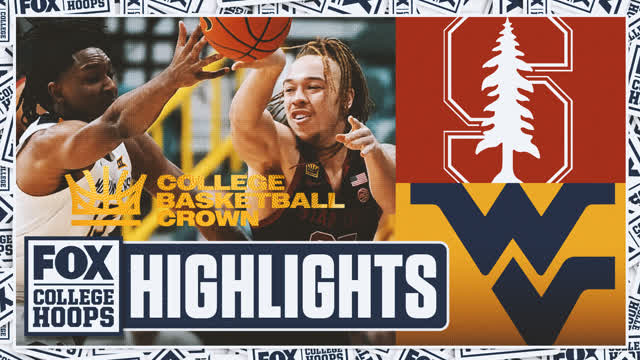
West Virginia Stuns Stanford in OT: Huff Leads Resilient Comeback in Las Vegas
West Virginia Stuns Stanford in OT: Huff Leads Resilient Comeback in Las Vegas
In a contest that mirrored the unpredictable nature of the inaugural post-season tournament, the West Virginia Mountaineers orchestrated a late-game masterpiece to overcome an eight-point deficit in regulation and eventually defeat the Stanford Cardinal 82-77 in overtime. The quarterfinals of the College Basketball Crown at the MGM Grand Garden Arena lived up to its billing, showcasing a battle of wills that saw the Mountaineers survive a monstrous individual performance from Stanford’s Ebuka Okorie. With the win, West Virginia advances to the semifinals with a 19-14 record, keeping their season alive in dramatic fashion.
The defining moment of regulation came with just 3.5 seconds remaining. Trailing by three, West Virginia guard Honor Huff drew a bewildering foul from Stanford’s Benny Gealer nearly 40 feet from the basket while attempting a desperation heave. Huff, a senior leader who has been the heartbeat of the Mountaineers all season, stepped to the charity stripe and calmly sank all three free throws to knot the score at 68. The composure displayed by Huff under immense pressure was the culmination of a 9-1 run over the final three minutes of regulation that completely erased Stanford's late-game cushion.
Overtime Heroics and the Resilience of the Gold and Blue
Once the game shifted to the extra period, Huff continued his dominance. He scored eight of his team-high 21 points in overtime, including a miraculous falling-down jumper that seemingly broke the spirit of the Cardinal defense. While West Virginia struggled from the perimeter throughout the night—shooting a dismal 2-of-20 from beyond the arc—they made up for it at the free-throw line, where they finished 22-of-26. Treysen Eaglestaff contributed 18 points, while Brenen Lorient added 14 points and seven rebounds, providing the interior toughness needed to withstand Stanford's physical frontcourt.
The Mountaineers' defense also stepped up when it mattered most. Despite Okorie’s offensive explosion, West Virginia limited the rest of the Stanford roster to just 43 combined points. The defensive strategy shifted late in the game to force the ball out of Okorie's hands, a tactic that finally paid dividends during the closing minutes of regulation and into overtime. West Virginia head coach Ross Hodge praised his team's grit, noting that this group is as resilient as any he has ever coached.
Team Stats and Look Ahead
West Virginia outproduced Stanford in points off turnovers (18-8) and points in the paint, compensating for their outside shooting woes. The Mountaineers now look toward a semifinal matchup against Creighton. The victory ensures that West Virginia will continue their pursuit of the College Basketball Crown, a tournament that has provided a vital platform for programs to find redemption after missing the NCAA Tournament field.
For a team that finished the regular season with a 9-9 mark in Big 12 play and endured several inconsistent stretches, this victory serves as a testament to their growth. As they head to the T-Mobile Arena for the next round, the Mountaineers carry the momentum of a team that simply refuses to go home.
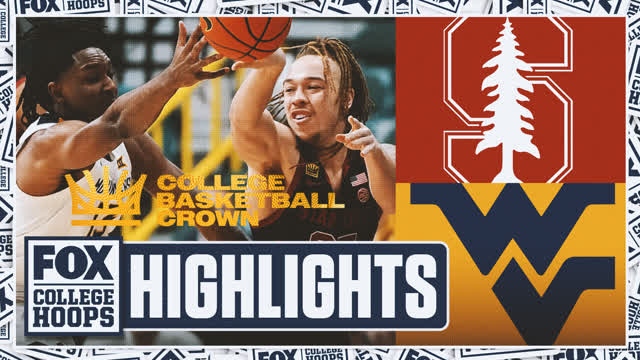
Report: Could Record-Breaking Freshman Ebuka Okorie Be Heading for the Transfer Portal?
Report: Could Record-Breaking Freshman Ebuka Okorie Be Heading for the Transfer Portal?
The Stanford Cardinal's season came to a heartbreaking end in Las Vegas, falling 82-77 in overtime to West Virginia despite a legendary performance from freshman phenom Ebuka Okorie. The New Hampshire native put the team on his back, pouring in 34 points on 13-of-23 shooting and dishing out five assists. The loss leaves Stanford with a 20-13 record and marks the end of a season that saw the program return to the postseason in consecutive years for the first time in over a decade. However, the immediate concern for Cardinal fans isn't the loss, but the future of their star guard.
Okorie's 34-point outburst was his eighth 30-point game of the season, breaking the long-standing ACC freshman record previously held by Duke's Marvin Bagley III. He finished the year ranked third all-time at Stanford in total points (719) and second in scoring average (23.2). His ability to create his own shot and navigate double teams has made him a household name in collegiate circles, but it has also made him a prime target for high-major programs looking for a plug-and-play star.
The Uncertain Future: NBA Draft or Transfer Portal?
Following the game, rumors began to swirl regarding Okorie's next move. While some mock drafts currently project him as a potential late first-round or early second-round selection in the 2026 NBA Draft, many analysts believe he would benefit from another year of college development to add strength to his 6-foot-2 frame. This has led to intense speculation that he could be one of the most coveted players in the transfer portal should he choose to leave Palo Alto. Sources close to the program indicate that major power-conference schools are already prepared to offer significant NIL packages to lure the prolific scorer.
Stanford head coach Kyle Smith expressed hope that the young core would remain intact, but acknowledged the realities of the current college basketball landscape. "Ebuka is an incredible player, and what he did this year was historic," Smith said. "We want him here, and we think the foundation we're building is special, but those decisions are ultimately in his hands.” Stanford currently boasts the No. 16 ranked recruiting class in the country, including four-star forward Aziz Olajuwon, but that core is predicated on Okorie serving as the centerpiece.
By the Numbers: A Historic Freshman Campaign
Throughout the season, Okorie led the ACC in scoring and was the only freshman in the nation to rank in the top ten in points per game. In the loss to West Virginia, he was supported by Aidan Cammann (12 points) and AJ Rohosy (10 points, 9 rebounds), but the Cardinal struggled to find a secondary scoring threat when Okorie was double-teamed in the closing minutes. Stanford's inability to convert 16 offensive rebounds into more than 14 second-chance points ultimately proved to be their undoing.
As the offseason begins, all eyes in the basketball world turn toward Okorie. Whether he chooses to declare for the draft, enter the portal, or return to Stanford to build on his record-breaking freshman year, his decision will shift the balance of power in whichever conference he lands. For now, the Cardinal are left to wonder if they have seen the last of the most talented freshman to wear the jersey in program history.
Creighton Advances in Vegas: Graves and Dix Fuel Second-Half Surge Against Rutgers
Creighton Advances in Vegas: Graves and Dix Fuel Second-Half Surge Against Rutgers
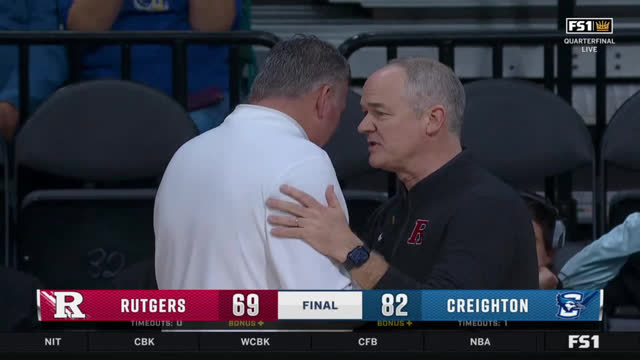
The retirement tour for Creighton head coach Greg McDermott continues for at least one more game. In a gritty quarterfinal matchup at the College Basketball Crown, the Bluejays overcame a slow start to dismantle the Rutgers Scarlet Knights 82-69. The victory at the MGM Grand Garden Arena ensures that McDermott, the winningest coach in program history, will lead his team into a semifinal showdown against West Virginia on Saturday. After announcing his retirement last month, the motivation within the Creighton locker room to "send Coach Mac out on top" was palpable throughout the second half.
Rutgers initially looked like the fresher team, jumping out to a 22-12 lead behind the speed of their young backcourt. However, Creighton found their rhythm late in the first half, punctuated by a critical Josh Dix three-pointer with 43 seconds left in the period that capped a 19-6 run. The Bluejays went into the locker room with momentum, but the real fireworks began after the intermission as their offense exploded for 51 second-half points.
Nik Graves Takes Over the Strip
The story of the night was the play of Nik Graves. The point guard was nearly unstoppable in the second half, scoring 25 of his season-high 28 points in the final 20 minutes. Graves repeatedly exploited the Rutgers defense with a mix of veteran pump fakes and aggressive drives to the basket, finishing 7-of-13 from the floor and 12-of-13 from the free-throw line. He also added eight assists, orchestrating an offense that shot a blistering 61.5% in the second half.
Dix was equally impactful, hitting four three-pointers and finishing with 14 points. His perimeter gravity opened up lanes for Jasen Green, who added 16 points and nine rebounds. The Bluejays' ability to share the ball was the difference, as they finished with 15 assists compared to just 12 for Rutgers. Creighton’s defense also adjusted after the early Rutgers surge, holding the Scarlet Knights to just 36.9% shooting for the game.
The Final Chapter for McDermott
As the final whistle blew, fans behind the Creighton bench hoisted signs thanking McDermott for his 16 years of service. With 366 wins under his belt, McDermott has transformed Creighton into a perennial power in the Big East. This deep run in the College Basketball Crown provides a fitting coda to a career defined by consistency and excellence. "We're going to have fun together for a few more days," McDermott said post-game. "This group has worked too hard to let it end now.”
Creighton (16-17) now turns its attention to the Mountaineers. The matchup promises to be a clash of styles, pitting Creighton's high-efficiency offense against West Virginia's physical defense. For the Bluejays, every game is now a single-elimination effort to prolong the career of their legendary leader. If Graves and Dix continue to play at this level, the "Coach Mac" era might just end with one last piece of hardware in the trophy case.
Rutgers Freshmen Show Flashes of Brilliance Despite Postseason Loss to Bluejays
Rutgers Freshmen Show Flashes of Brilliance Despite Postseason Loss to Bluejays
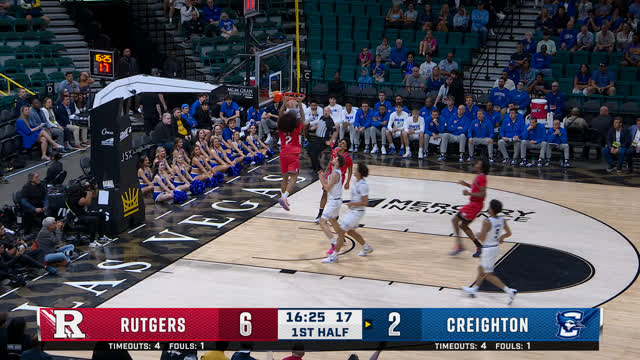
While the final score read 82-69 in favor of Creighton, the Rutgers Scarlet Knights left the floor in Las Vegas with reasons for optimism. The highlights of the night were dominated by the synergy between the team's promising young guards, specifically Tariq Francis and Lino Mark. One play in particular electrified the crowd as Francis threaded a perfect lob to a soaring Mark for a thunderous finish, briefly giving Rutgers the momentum in the first half. Though the season ends with a 14-20 record, the performance of the freshman class suggests that Steve Pikiell has the foundations of a winner in Piscataway.
Lino Mark, a 6-foot-2 guard from Los Angeles, finished the game with 14 points and seven rebounds, showcasing the speed and explosiveness that made him a top recruit. Alongside him, Francis led the Scarlet Knights in scoring with 19 points, despite a difficult shooting night from the floor. The duo's ability to pressure the rim and create for others was the catalyst for Rutgers' early 10-point lead. Jamichael Davis also provided a significant spark off the bench, contributing 17 points on 7-of-9 shooting without committing a single turnover.
Pikiell's Vision for the Future
Head coach Steve Pikiell addressed the future of the program in the post-game press conference, emphasizing the importance of keeping this young core together. "We have a new administration and our resources have changed," Pikiell noted, hinting at a more aggressive approach to NIL and the transfer portal. "I'm looking forward to these guys returning. This was a valuable experience for the freshmen who logged heavy minutes tonight. They got better as the year went on, and I'm very hopeful for what we can do next season.”
The challenge for the Rutgers staff will be navigating the transfer portal era. With players like Mark and Francis showing high-level potential on a national stage like the College Basketball Crown, other programs will undoubtedly be watching. However, the chemistry displayed between the two guards on the court suggests a group that enjoys playing together. Mark's defensive tenacity, finishing with two steals, coupled with Francis' playmaking (3 assists), gives Rutgers a backcourt that can compete in the physical Big Ten.
Building on the Vegas Experience
Statistically, Rutgers dominated the glass early on but faded late, finishing with 30 rebounds to Creighton's 32. The offensive struggles were evident in their 2-for-14 performance from three-point range, a metric that Pikiell will surely look to address through both development and recruitment. However, the "Vegas Experience" provided these freshmen with high-stakes minutes that are impossible to replicate in practice.
As the Scarlet Knights head into the offseason, the focus will be on retention and refinement. The flashes of brilliance from Mark and the steady hand of Francis are the building blocks for a program looking to snap a streak of losing seasons. If the core remains intact, the Scarlet Knights could be a dark horse in the conference next winter, fueled by the lessons learned under the bright lights of the MGM Grand Garden Arena.
Zugic’s Elite Vision Seals Victory: Creighton’s Transition Dominance on Display
Zugic’s Elite Vision Seals Victory: Creighton’s Transition Dominance on Display
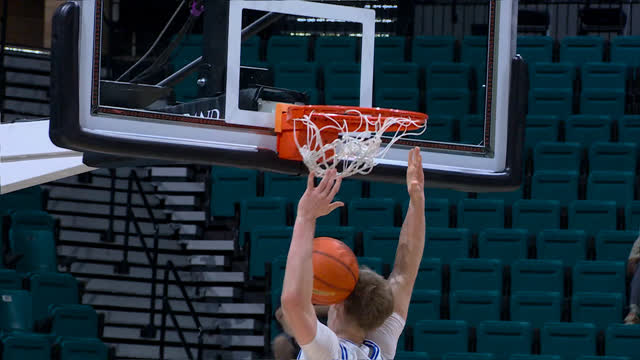
In the closing moments of Creighton’s 82-69 quarterfinal victory over Rutgers, a single sequence served as the perfect microcosm for the Bluejays' high-octane offense. With Rutgers attempting a desperate full-court press to claw back into the game, Fedor Žugić collected the ball near the baseline and unleashed a staggering full-court pass that found Josh Dix in stride for a punctuating slam dunk. The "dagger" play effectively ended the Rutgers season and sent a clear message to the rest of the field in the College Basketball Crown: the Bluejays are clicking at the right time.
Žugić, the 6-foot-6 sophomore from Montenegro, has become a vital x-factor for Creighton. Since being cleared for eligibility earlier in the season, his role has expanded from a rotational piece to a primary playmaker off the wing. While his scoring numbers may not always jump off the page, his basketball IQ and European-pro experience allow him to make reads that many collegiate defenders simply aren't prepared for. In the win over Rutgers, Žugić contributed key minutes during the second-half run where Creighton shot an absurd 61.5% from the field.
Josh Dix: The Perfect Complement
Josh Dix has thrived as the recipient of Žugić's vision. Finishing the game with 14 points, including four critical three-pointers, Dix has solidified his role as a premier spacer and transition threat. His chemistry with the rest of the Bluejays' backcourt was evident throughout the second half as they ripped off a 12-2 run to take a double-digit lead they would never relinquish. The Bluejays finished with a 15.5 assists-per-game average, highlighting a system that prioritizes the extra pass and high-percentage looks at the rim.
Beyond the highlight-reel dunks, Dix's defensive contributions were equally important. Tasked with guarding Rutgers' explosive freshmen, Dix helped limit the Scarlet Knights to just 36.9% shooting. His length and lateral quickness disrupted the rhythm of the Rutgers offense, forcing them into contested jumpers and allowing Creighton to get out in transition where they are most dangerous.
Tactical Adjustments and Semifinal Stakes
The second-half surge was not just about shot-making; it was about the adjustments made by the Creighton staff. After a sluggish first half where they trailed by as many as ten, the Bluejays simplified their offensive sets to exploit the aggressive Rutgers hedges. By using Žugić as a secondary initiator, Creighton was able to bypass the initial pressure and find open shooters like Dix and Nik Graves.
As Creighton prepares for their semifinal matchup with West Virginia, they will need to maintain this level of transition efficiency. The Mountaineers are known for their physical, half-court defensive identity, and the Bluejays will look to players like Žugić and Dix to push the pace and create easy scoring opportunities before the defense can set. If Creighton can continue to pair elite vision with high-level finishing, they will be a difficult out for anyone remaining in the Vegas field.

Overtime Thriller: Pack and Sooners Edge Buffaloes in Crown Quarterfinal
Oklahoma Rallies Past Colorado in High-Stakes Overtime Battle
In a contest that defined the intensity of the new postseason landscape, the Oklahoma Sooners outlasted the Colorado Buffaloes in a 90-86 overtime classic during the quarterfinals of the College Basketball Crown in Las Vegas. The matchup, a revival of former Big 12 rivalries, saw the Sooners weather a late-regulation collapse to dominate the extra period behind the veteran leadership of Nijel Pack. The victory propels Oklahoma into the semifinals and marks a significant milestone for coach Porter Moser as he navigates the Sooners through their inaugural seasons in the SEC.
Pack’s Poise and the Overtime Surge
As the game moved into the extra five minutes, the momentum seemed to favor a surging Colorado squad. However, Nijel Pack took command, scoring six of his team-high 20 points in overtime, including two back-to-back three-pointers that silenced the Buffaloes' bench. Pack’s ability to create space and hit contested jumpers proved to be the difference-maker in a game where both teams shot above 85% from the free-throw line. The Sooners’ backcourt, led by Pack and the rising star Xzayvier Brown, demonstrated a level of late-game execution that has often eluded them during the grueling SEC regular season.
Colorado’s Heartbreak and Hargress’s Heroics
The Buffaloes (17-16) entered the night short-handed but played with a desperation that nearly upended the Sooners. Barrington Hargress delivered a career-best performance, pouring in 31 points and hitting the game-tying driving layup with just 1.6 seconds remaining in regulation. Colorado’s 7-0 run to close out the second half was a testament to Tad Boyle’s tactical adjustments, utilizing Alon Michaeli to stretch the floor and confuse the Oklahoma interior defense. Despite shooting only 24% from the floor in the second half, the Buffaloes’ relentless pursuit of second-chance points and free-throw opportunities kept them within striking distance until the final horn.
Statistical Breakdown and Team Identity
The numbers reflect a battle of attrition. The teams combined for a staggering 71 free-throw attempts, with Oklahoma converting 28 of 32. Beyond the charity stripe, the Sooners found critical production from their bench, specifically from Kuol Atak, who chipped in 16 points and provided the length necessary to disrupt Colorado's passing lanes. For the Sooners, this win moves them to a 20-15 record, a crucial psychological barrier as they look to build a culture of postseason winning. Colorado concludes their tournament run with a 17-16 record, showing flashes of a core that could dominate the Big 12 next season.
Looking Ahead: The Path to the Crown
With this victory, Oklahoma moves on to face the winner of the Baylor-Minnesota quarterfinal. The Sooners have found their rhythm in Las Vegas, averaging over 85 points per game in the tournament thus far. Coach Porter Moser emphasized after the game that the team's resilience in overtime was "the most growth he's seen all year." As the College Basketball Crown reaches its final stages, the Sooners are proving that their transition to a tougher conference has prepared them for the high-pressure environment of elimination basketball. All eyes now turn to Saturday's semifinal to see if this offensive explosion can be sustained.

Defensive Masterclass: Baylor Stifles Minnesota to Secure Semifinal Berth
Bears Maul Gophers with Dominant Second-Half Run in Las Vegas
The Baylor Bears showcased why they remain one of the most dangerous postseason programs in the country, dismantling the Minnesota Golden Gophers 67-48 on Wednesday night. In a quarterfinal matchup at the MGM Grand Garden Arena, Baylor’s stifling defense held Minnesota to a paltry 39% shooting and a dismal 3-of-23 from beyond the arc. The victory was fueled by a signature 17-1 run in the second half, a surge that effectively ended the Gophers' season and sent Scott Drew’s squad into the College Basketball Crown semifinals with massive momentum.
The Yessoufou Era Begins
While veterans often lead the way in April, it was freshman phenom Tounde Yessoufou who stole the show. Yessoufou dropped 19 points and grabbed seven rebounds, displaying a physical maturity that overwhelmed the Minnesota frontline. His ability to score in transition and finish through contact was the engine of Baylor’s offense during their decisive second-half spurt. Alongside him, senior guard Obi Agbim provided the perimeter punch, sinking five three-pointers on his way to 17 points. The chemistry between the rookie forward and the veteran guard has become the focal point of a Baylor team that finished the regular season with a 17-16 record but looks revitalized in the postseason.
Minnesota’s Offensive Struggles
For the Golden Gophers (15-18), the night was a frustration of missed opportunities and physical mismatches. Led by first-year coach Niko Medved, Minnesota attempted to rely on their perimeter shooting to negate Baylor’s size advantage. However, the strategy backfired as the Gophers struggled to find any rhythm against Baylor’s switching man-to-man defense. Cade Tyson was the lone bright spot for Minnesota, matching Yessoufou with 19 points of his own, but he received little support from a backcourt that turned the ball over 12 times. The loss marks the end of a transitional year for Minnesota, who showed promise in the Big Ten but lacked the depth to compete with Baylor's athleticism.
A Historic Defensive Performance
Baylor’s defensive effort was historic in the context of their season; it was the first time since early 2025 that the Bears held an opponent under 50 points. The interior presence of Caden Powell and James Nnaji forced Minnesota into contested mid-range jumpers and prevented the Gophers from establishing any paint presence. Baylor finished the game with a 38-20 advantage in points in the paint and dominated the boards, ensuring that Minnesota never had the chance for second-chance points during the Bears' long scoring runs.
Championship Aspirations in Sight
With the win, Baylor sets up a heavyweight semifinal clash against the Oklahoma Sooners. Coach Scott Drew noted that the team’s three-week layoff following the Big 12 tournament allowed them to get healthy and focus on defensive rotations—a claim clearly supported by the night’s result. As the Bears continue their quest for the College Basketball Crown, their blend of elite freshman talent and battle-tested senior leadership makes them the oddsmakers' favorite to take home the inaugural title in the desert. The Bears are peaking at the perfect time, and their defensive identity is now their greatest weapon.
Kuol Atak's Coming Out Party: Bench Spark Fuels Oklahoma's Deep Run
Sooners’ Depth on Display: The Jones-Atak Connection
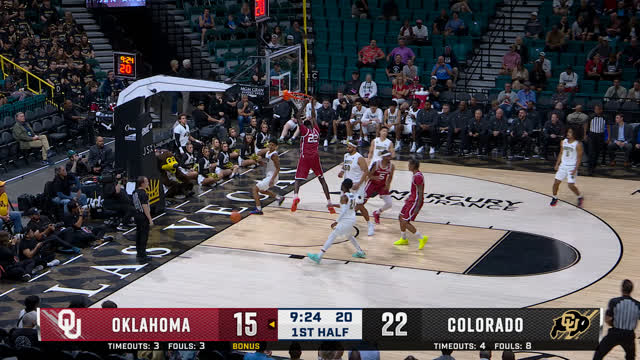
As the College Basketball Crown tournament progresses, the Oklahoma Sooners are proving that their strength lies in their numbers. While the headlines often focus on the starting backcourt, it was the chemistry between veteran Jadon Jones and freshman Kuol Atak that ignited the crowd in their recent quarterfinal victory. A highlight-reel baseline play, where Jones threaded a perfect pass to a cutting Atak for a thunderous finish, served as the catalyst for a scoring run that changed the complexion of the game. This "bench-mob" energy has become the secret sauce for Porter Moser's team as they aim for a postseason title.
Kuol Atak: The Freshman Mismatch
Freshman forward Kuol Atak has rapidly evolved from a project player into a primary offensive weapon. Standing 6-foot-9 with the agility of a guard, Atak finished the quarterfinal with 16 points, including several critical three-pointers that forced the defense to step out of the paint. His ability to run the floor in transition and find soft spots in the zone has made him the perfect target for Oklahoma's playmakers. Against Colorado, Atak’s length was equally valuable on the defensive end, where his two blocks helped the Sooners maintain a slim lead during the closing minutes of regulation.
Jadon Jones: The Savvy Orchestrator
Senior guard Jadon Jones may not always lead the box score in points, but his basketball IQ and passing vision have become indispensable. Jones has embraced a role as the secondary creator, often drawing the defense’s attention before delivering pinpoint assists to the Sooners’ big men. His "dime" to Atak was just one example of his ability to read the floor under pressure. With a season average of 11.2 points and nearly 4 assists per game, Jones provides a steady hand that allows younger players like Atak and Xzayvier Brown to play with freedom and confidence.
The Strategic Importance of the Bench
Oklahoma’s roster depth is a direct result of their aggressive portal recruiting and freshman development. The Sooners are currently ranking in the top 20 nationally in bench scoring, a stat that becomes even more critical in a tournament format where teams play multiple games in a short window. By rotating players like Atak and Jones into the lineup, Coach Moser is able to keep his starters fresh for the final ten minutes—a strategy that paid off immensely in their recent overtime win. The Sooners’ ability to maintain high defensive intensity without their primary stars on the floor is a luxury few other teams in the Crown field possess.
Building Momentum for the Semifinals
Looking ahead, the Atak-Jones connection will be vital if Oklahoma hopes to dismantle the high-pressure defenses they will face in the semifinals. The Sooners have found a rhythm that balances interior scoring with perimeter threats, making them difficult to scout. If Atak continues to play with this level of aggression and Jones remains a clinical distributor, Oklahoma’s "bench spark" might just carry them all the way to the trophy presentation. In a tournament full of stars, it’s the Sooners’ collective effort that is making the loudest statement in Las Vegas.
Baylor’s Flight School: Agbim and Carr Electrify Las Vegas Crowd
Transition Terror: Baylor’s Backcourt Sizzles in Postseason
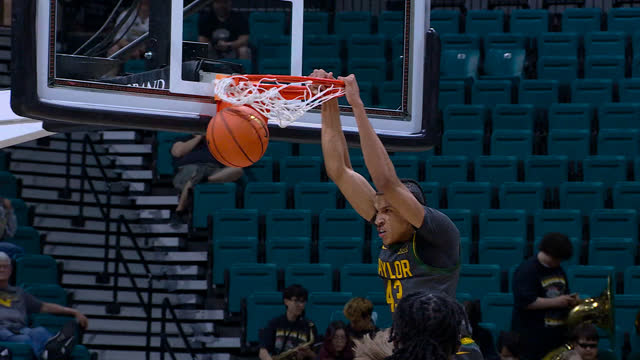
The Baylor Bears have always been synonymous with speed and athleticism, but the current duo of Obi Agbim and Cameron Carr is taking that reputation to new heights. During the quarterfinals of the College Basketball Crown, the pair connected on a spectacular half-court lob that culminated in a thunderous slam by Carr, sending the Las Vegas crowd into a frenzy. This "Flight School" mentality has turned Baylor's transition game into a nightmare for opponents, as Scott Drew’s team looks to capitalize on their superior foot speed and verticality in the tournament's final rounds.
Obi Agbim’s Dual-Threat Playmaking
Senior transfer Obi Agbim has seamlessly integrated into the Baylor system, providing a veteran presence that balances the team’s youth. In the win over Minnesota, Agbim was the primary architect of the Bears' offense, finishing with 17 points and a flurry of transition assists. His ability to rebound and immediately push the pace puts immense pressure on opposing guards to retreat, often leaving lanes open for Baylor's cutters. Agbim’s shooting has also been a revelation; he hit 5-of-8 from deep in the quarterfinal, proving that he is just as dangerous from the perimeter as he is when threading the needle on a fast break.
Cameron Carr: The High-Flying Finisher
Junior guard Cameron Carr has become the ultimate highlight-reel player for the Bears. Averaging 15.2 points per game this season, Carr has developed into a reliable three-level scorer, but his true value lies in his ability to change the game's energy with his athleticism. Whether it’s a chase-down block or an alley-oop finish, Carr provides the emotional spark that fuels Baylor's scoring runs. Against the Gophers, he tallied 15 points and nine rebounds, narrowly missing a double-double while serving as the primary recipient of Agbim’s creative passing. Carr’s length and 6-foot-5 frame make him a mismatch for smaller guards in the Big 12 and beyond.
The Scott Drew Tactical Edge
Baylor’s success in the open floor is no accident. Coach Scott Drew has emphasized a "run and gun" philosophy that relies on aggressive defensive rebounding. The Bears currently rank in the top 10 nationally in fast-break points, a testament to their conditioning and unselfishness. By allowing Agbim and Carr the freedom to initiate the break, Drew forces opposing coaches into difficult substitution patterns. If a team tries to go small to match Baylor’s speed, the Bears utilize their interior size; if they stay big, Agbim and Carr simply outrun them. It is a tactical "Catch-22" that has the Bears on the verge of another championship game.
Championship Outlook
As Baylor prepares for their semifinal matchup, the Agbim-Carr connection will be the focal point of the scouting report. The Sooners will likely attempt to slow the game down and force Baylor into a half-court battle, but as the Bears showed on Wednesday, their defense creates the transition opportunities they crave. If Baylor can continue to play above the rim and convert on their "half-court prayers," they will be incredibly difficult to stop. For the fans in Las Vegas, the show is just getting started, and the Bears are ready to take flight once again.